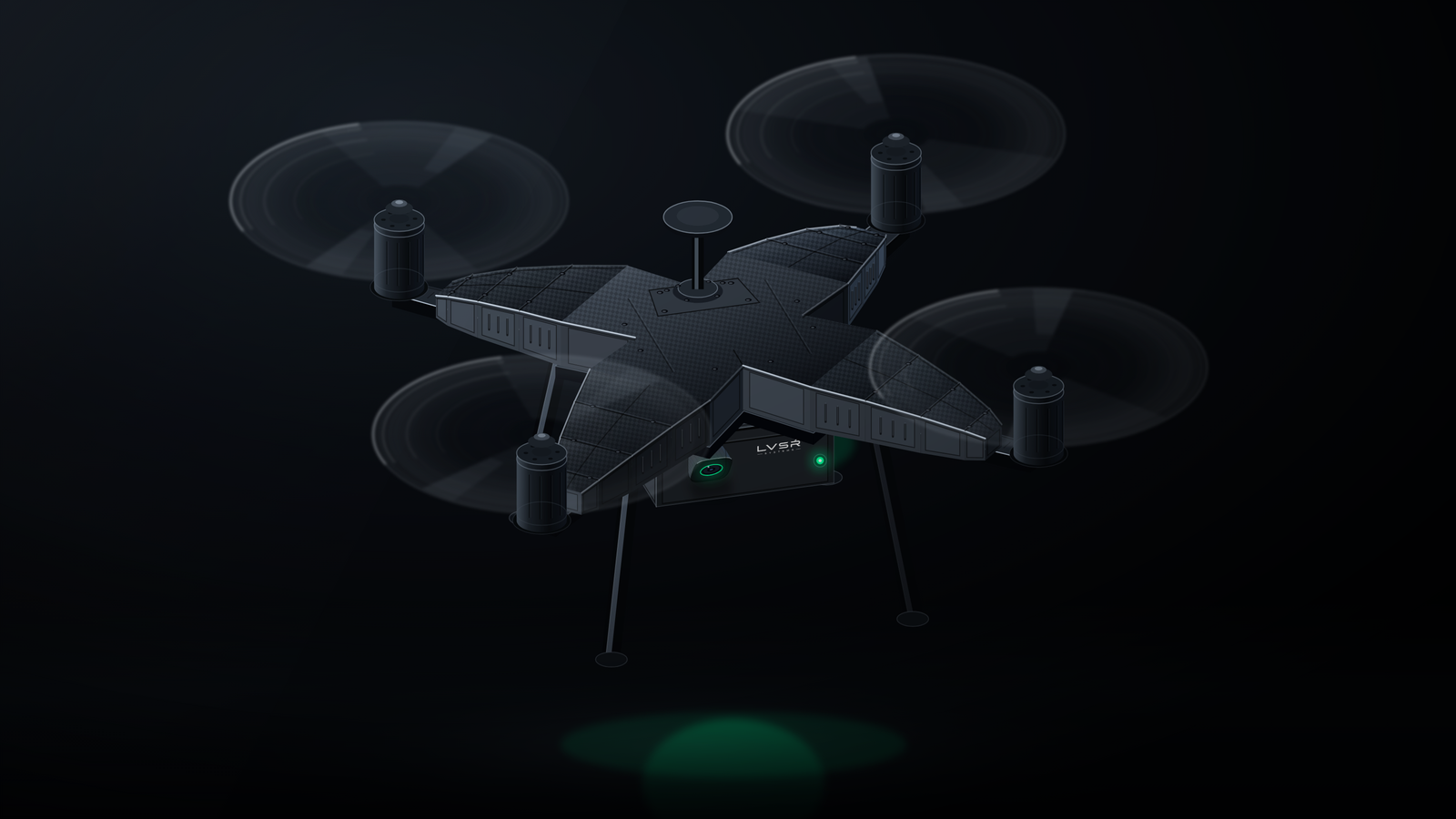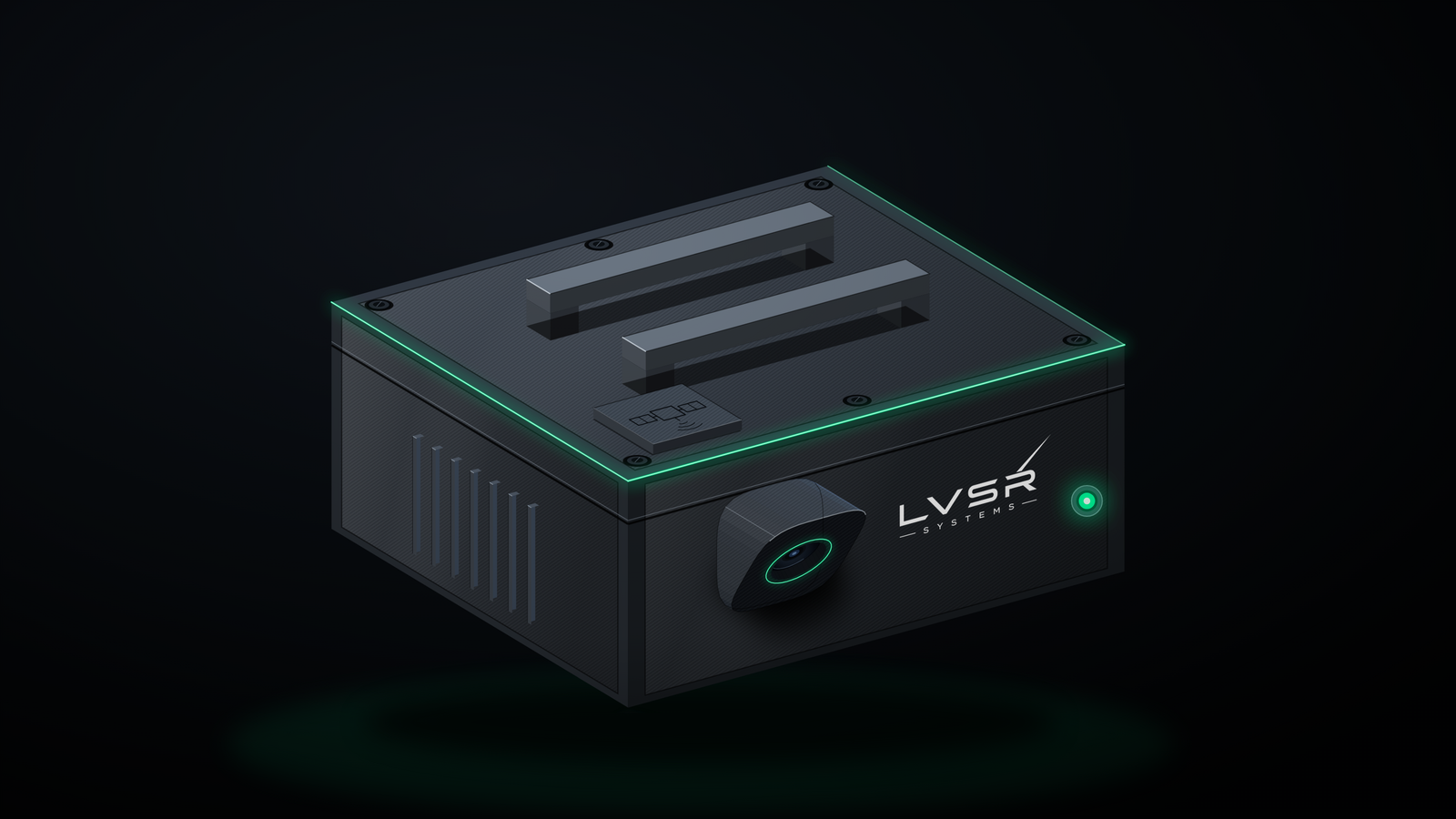
Autonomous drones that document conflict zones and incident sites — and lock every image with proof of where it came from, when it was taken, and that no one has touched it since. Evidence that holds up in court.
FIG.01 — Capture → seal-at-sensor → encrypted uplink → facility decrypt + verify. Plaintext exists only inside the operator's vault.
We build a system that makes evidence impossible to fake.
When our camera takes a picture, it is encrypted and signed inside the sensor, before it is even stored. If a single pixel is changed afterwards, it shows immediately. Today, footage from war zones is dismissed as fake or AI-generated. With qXauri, a court can prove the material is genuine. The whole system is built for mobility: one operator, one drone, one laptop — deployable anywhere, no infrastructure required. Our customers are international justice bodies, national authorities, and human rights organisations.
At a conflict site, the truth is the first thing attacked.
When something happens in a war zone or at the scene of an atrocity, what actually occurred is contested almost immediately. Footage is dismissed as fake. Records are quietly altered. Witnesses are pressured, moved, or silenced. Years later, when a court finally looks at the evidence, no one can prove where it came from — and the people responsible walk free.
LVSR exists to close that gap. It captures events as they happen and seals each one with proof of where it came from, the exact moment it was taken, and the fact that nothing has been changed since. Not a claim you're asked to trust — math that anyone can check.
The aim is simple: make the truth from a conflict site impossible to deny, dismiss, or quietly rewrite — so it can stand in a courtroom and hold someone to account.
From target selection to sealed evidence opened at the facility — the qXauri workflow in two minutes.
Drone footage in this film is AI-generated to visualise the mission concept. The console, cryptography and unlock sequence shown are the real working system. We say so plainly — building systems that make truth provable starts with telling it.
Fully mobile — no infrastructure, no base station. And two channels, deliberately: a control link that flies the aircraft, and an evidence path the control link never touches. Every hop below, from photon to courtroom.
One person, one backpack: drone, charged batteries, laptop with the radio link. Deployable anywhere — mobility is the point.
The operator marks a location; the aircraft flies the mission autonomously and documents the site from multiple angles and altitudes.
The raw frame exists only in the device's working memory — the seal closes before anything touches disk.
Mission complete — or control link lost — the aircraft returns and lands on its own. Everything on board is sealed ciphertext with a signed position-and-time trail.
The operator connects the laptop and pulls the sealed containers with one click — ciphertext plus its signed fingerprint and chain entry.
Upload, courier, USB stick — the transport needs no trust, because the security travels inside the file.
The evidence locker. The one private key lives here on a physical USB key — and nowhere else on Earth.
The system assumes hostile conditions. No protection below depends on a human noticing in time.
Losing the control link does not lose evidence — the channels are separate. The aircraft flies its mission autonomously and returns home on link loss. GNSS quality is judged per capture: a degraded or spoofed fix is recorded as untrusted rather than silently accepted.
Nothing readable is ever on board, so a downed aircraft leaks nothing. Multiple drones can seal the same scene independently — corroborating witnesses with no shared link to take down — so losing one aircraft does not erase the record.
A taken drone cannot read its own recordings — the decryption key was never on it. Its signing key is short-lived: authorised per mission, it expires on its own. A stolen device's ability to sign dies automatically, whether or not anyone is left to notice.
An aircraft that fails to check in past its window is automatically flagged and revoked — no human decision required. Every capture also sits in a signed position-and-time chain, so footage inserted after a capture must fall into a visible gap in the timeline.
The roadmap closes the last door: a hardware secure element generates the signing key inside a tamper-resistant chip that never releases it. At that point, physically capturing the aircraft yields nothing at all.
What exists today, verified by our own hands — and what comes next.
The field is assumed hostile — the radio is tapped, the drone may be seized, and not everyone in the loop is trusted. Each design decision answers a specific attacker.
Comms are assumed compromised end to end. Because data is sealed at the sensor, a captured stream is ciphertext keyed to a facility the attacker can't reach.
Every capture is hashed and signed in hardware the moment it's recorded. Alter a single byte and verification fails at the facility — silently editing evidence is impossible.
A captured or hacked drone yields nothing readable. It never holds the private key and never stores plaintext — past captures stay sealed.
No operator, integrator, or LVSR employee can decrypt anything. The private key lives only with the customer's facility — trust is removed from people and placed in math.
You don't have to take any of this on faith — that's the point. It's built from standard, well-understood cryptography that an independent expert can inspect and verify. Here's what each piece does.
From a lone journalist in the field to a national ministry — LVSR is built for the people and institutions that put the truth first, and need a record no one can wave away.
Journalists, field investigators, and frontline witnesses documenting what others would bury — so their record can't be dismissed as hearsay.
Human-rights monitors gathering proof of what happened, in a form no party can dismiss as fabricated.
Tribunals and bodies such as the ICC — capture chains attributable and independently verifiable across jurisdictions.
Lawful documentation of incidents and operations, with evidence that survives legal challenge.
No layers, no committee. The technology people rely on is built and answered for by the person who made it.
LVSR Systems is the work of one person — from the capture firmware to the cryptography behind an audit. The people who depend on this technology deal directly with the person who built it.
LVSR is built by Livsro Group AB, a registered Swedish company. Full company background, ownership and transparency live on the parent-company site → livsroab.se ↗
LVSR is one person with a mission far larger than one person. Getting there means working with others who want the same thing: a world where the truth can't be erased. We're actively looking for three kinds of partner.
We're open to investment to fund continuous development — the verification platform now, capture hardware next. If you back technology built for accountability and truth, we'd like to talk.
We'd rather integrate with excellent drone and sensor makers than reinvent them. Your airframes and hardware, our encryption and chain of custody — a natural fit. Let's explore a cooperation.
The core system is proprietary — but the hardest problems shouldn't be solved in isolation. On specific, well-defined challenges we open the door to the open-source community, and credit every contribution. If you're drawn to difficult cryptography and provenance work, there's a place for you here.
Vetted operators only. Briefings cover deployment, key custody, and the admissibility model for your jurisdiction.
A secure line will be opened shortly.